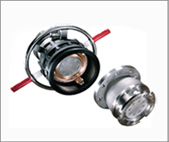
Think about what actually happens when a pressurised fluid line gets disconnected the wrong way. You encounter spillage, exposure, and in many cases, an injury that could have been avoided with the right coupling. Dry disconnect couplings exist precisely to stop that chain of events before it starts.
Dry disconnect couplings are engineered to seal both ends of a fluid transfer line the moment they are separated. No drips, no residual pressure release, no product loss. That might sound like a small thing, but across a full production shift, it adds up to a meaningful reduction in contamination risk, downtime, and operator exposure.
This post looks at how they work, where they matter most, and what to think about when specifying one for a particular application.
What Dry Disconnect Couplings Actually Do
A standard coupling, when pulled apart, leaves both ends open. Whatever was in the line comes out. Dry disconnect couplings use internal valves on each half of the connection. When the coupling is mated, both valves open and fluid flows freely. The moment you begin to separate them, the valves close before the seal breaks.
The result is a disconnect with near-zero spillage. Some designs achieve residual drip volumes well below 1 ml per cycle. That is not accidental. It is the product of valve geometry, spring tension, and seal material selection working together under engineering conditions that account for fluid viscosity, operating pressure, and connection speed.
Why Dry Disconnect Couplings Matter in Chemical and Fuel Handling
The chemical and fuel sectors are where dry disconnect couplings first became standard practice, and the reasons are straightforward. Many of the fluids involved are flammable, corrosive, or toxic. Even small quantities released into the air or onto a surface represent a serious hazard.
OSHA regulations in the United States and equivalent standards across the EU under the ATEX and REACH directives place specific requirements on fluid transfer operations involving hazardous substances. Dry disconnect couplings directly address those requirements by eliminating the primary release point in a transfer system.
The secondary benefit is often overlooked: operator confidence. When engineers and handling staff know that disconnecting a line will not result in splashback or unexpected pressure release, they are more likely to follow correct procedures. Ergonomics and safety protocols tend to hold up better when the equipment supports them.
Tank truck loading and unloading is perhaps the clearest example. A single loading arm connection and disconnection cycle using traditional fittings can release measurable volumes of product. Over hundreds of cycles per week, that represents both a health risk and a material loss figure worth calculating.
How Dry Disconnect Couplings Improve Safety in Industrial Fluid Transfer
Beyond chemical handling, dry disconnect couplings are used wherever frequent line changes create repeated exposure risks. Food and beverage processing is one area where they are increasingly specified. Contamination from residual products at a connection point is a hygiene issue, not just a housekeeping one.
Pharmaceutical manufacturing takes this further. Cleaning-in-place systems and sterile fluid transfer lines are often operated in environments where any product release could compromise batch integrity. Dry disconnect couplings are designed to support those sterile boundaries. They can be specified in stainless steel with PTFE or EPDM seals to meet food-grade and pharmaceutical-grade standards.
In hydraulic applications, the coupling type reduces oil mist and splatter during maintenance disconnections. Technicians working in enclosed plant spaces benefit from reduced inhalation risk and cleaner surfaces, which make fault detection easier over time.
Selecting the Right Dry Disconnect Coupling for Your Application
Selecting a dry disconnect coupling is not a one-size-fits-all exercise. The specification needs to account for the fluid being transferred, the operating pressure and temperature range, and the connection frequency. Here is what experienced procurement engineers typically look at:
- Body material: Aluminium is common for lower-pressure fuel applications. Stainless steel is preferred for corrosive chemicals or hygienic environments. Some designs use composite materials where weight is a factor.
- Seal compatibility: PTFE is compatible with aggressive chemicals. EPDM works well with steam and water-based fluids. Buna-N (nitrile) is standard for petroleum products. Getting the seal material wrong significantly shortens service life.
- Pressure rating: Check both working pressure and surge pressure. Fluid hammer events in long transfer lines can produce pressure spikes well above steady-state values.
- Locking mechanism: Push-pull, bayonet, and threaded collar designs each have their place. High-vibration environments may need a locking collar with a secondary retention device to prevent accidental separation.
See also: The Benefits of AI-Powered Business Applications
Wrapping Up
Working with a supplier who can provide technical guidance on material selection, compliance documentation, and field service support makes that process considerably more straightforward. The component is the starting point. Understanding how it behaves across its full service life is what makes the difference in a real plant environment.
For engineers specifying couplings for the first time, or replacing a standard fitting with a dry disconnect design, the investment in getting the initial specification correct pays back across the entire service interval.
