Handling and transferring diesel fuel requires suitable equipment, careful procedures and attention to safety. Whether fuel is being moved between storage tanks, machinery, vehicles or containers, using the right equipment can make the process more controlled and efficient. A Diesel fuel transfer pump is designed to move diesel from one location to another while helping reduce manual handling and unnecessary spills.
Choosing the right pump is not simply about finding a device that can move fuel. Factors such as flow rate, compatibility, power source, operating conditions and safety features can all affect performance. Understanding these considerations can help users select equipment that is appropriate for their specific fuel-handling requirements.
What Is a Diesel Fuel Transfer Pump?
A diesel fuel transfer pump is equipment used to transfer diesel fuel between storage tanks, drums, containers, vehicles and other approved fuel systems. Depending on the application, pumps can operate using electricity, batteries, compressed air or manual power.
The basic purpose is straightforward: the pump creates the pressure or suction required to move diesel through a hose or pipe. This can make fuel transfer considerably easier than relying on gravity or manual pouring.
Different applications require different pump designs. A small operation may only need a compact pump for occasional transfers, while agricultural, construction or industrial environments may require equipment capable of handling larger fuel volumes regularly.
Why Choosing the Right Pump Matters
Selecting an unsuitable pump can create operational difficulties and potentially increase safety risks. The right equipment should match the fuel, storage system and frequency of use.
1. Improved Fuel Transfer Control
A suitable pump gives users greater control over how quickly fuel moves from one location to another. This can be particularly useful when filling machinery or vehicles where excessive flow could result in overflow or spillage.
Controlled transfer also makes it easier for operators to monitor the process and stop the flow when the required amount has been delivered.
2. Reduced Risk of Spills
Diesel spills can create slippery surfaces, unpleasant odours and environmental concerns. They may also require additional cleaning and disposal procedures.
A properly selected pump, combined with suitable hoses, fittings and dispensing equipment, can help minimise unnecessary leaks and spills. Secure connections and appropriate flow rates are particularly important for maintaining controlled fuel transfer.
3. Better Operational Efficiency
Manual fuel handling can take considerable time, especially when larger quantities need to be transferred regularly. A suitable pump can streamline the process and reduce unnecessary physical effort.
For businesses and operators that regularly refuel equipment, improving transfer efficiency can help reduce downtime and allow machinery to return to work more quickly.
Key Factors to Consider When Choosing a Pump
Not every Diesel fuel transfer pump is suitable for every application. Several factors should be considered before making a selection.
Flow Rate
Flow rate refers to how much fuel the pump can move within a particular period. A higher flow rate may be beneficial for commercial or industrial applications where large quantities of diesel need to be transferred efficiently.
However, a high flow rate is not always necessary. Smaller applications may benefit from a lower and more manageable transfer speed.
Power Source
Diesel transfer pumps can use different power sources, including:
- Electrical power
- Battery power
- Manual operation
- Compressed air
The appropriate option depends on where the pump will be used and what power sources are available. Portable applications may benefit from battery-operated equipment, while fixed installations may have access to a reliable electrical supply.
Fuel Compatibility
The pump must be suitable for diesel fuel and compatible with the intended operating conditions. Materials used in the pump, seals, hoses and fittings should be designed to withstand contact with diesel.
Using equipment that is not compatible with the fuel can contribute to deterioration, leaks or premature component failure.
Hose and Connection Requirements
The pump is only one part of a complete fuel transfer system. Hoses, connectors, filters, nozzles and other components also need to be appropriate for diesel fuel.
Connections should be secure and properly fitted to reduce the possibility of leaks during operation.
Safety Features to Look For
Fuel transfer should always be carried out with safety in mind. Depending on the application, useful safety features may include automatic shut-off mechanisms, suitable filtration, secure connections and overload protection.
Operators should also follow the manufacturer’s instructions and applicable workplace safety requirements.
Preventing Static Electricity
Static electricity can present a potential hazard when handling combustible fuels. Proper grounding and bonding procedures may be required depending on the equipment and installation.
Operators should follow relevant safety guidance and avoid improvising electrical connections or grounding arrangements.
Preventing Overfilling
Overfilling tanks or containers can lead to spills and unnecessary fuel exposure. Monitoring the transfer process and using appropriate shut-off equipment can help reduce this risk.
Operators should never leave fuel transfer unattended unless the equipment and procedure are specifically designed for safe automatic operation.
Where Are Diesel Transfer Pumps Commonly Used?
Diesel transfer pumps are used across many industries and applications where diesel needs to be moved efficiently.
Agriculture
Farms often operate tractors, harvesters, generators and other diesel-powered machinery. A suitable transfer system can make refuelling equipment more convenient and organised.
Construction
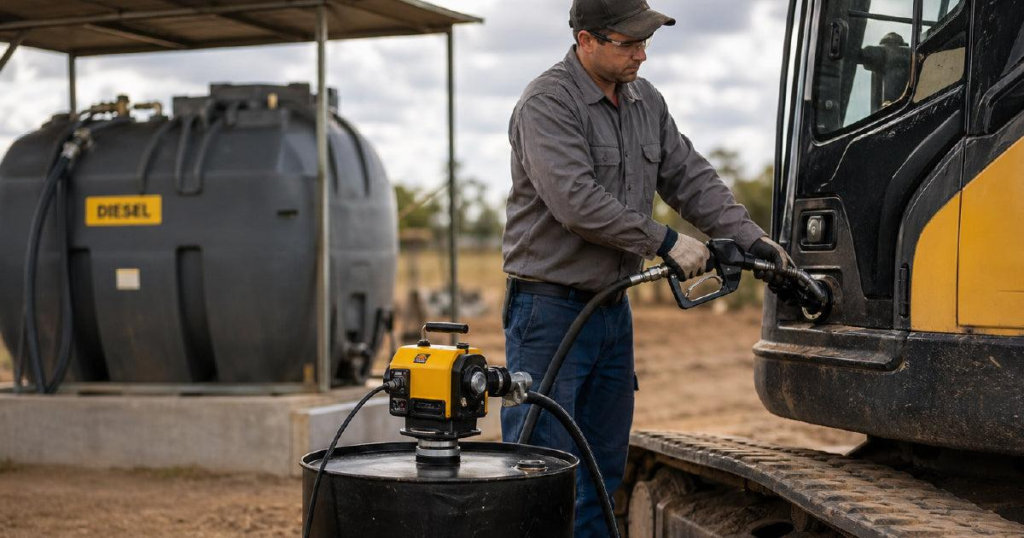
Construction sites frequently rely on diesel-powered machinery, including excavators, loaders, generators and other heavy equipment. Efficient fuel transfer can help reduce downtime caused by refuelling.
Transport and Fleet Operations
Businesses operating multiple diesel vehicles may require reliable fuel transfer equipment to support regular fleet refuelling. The right system can help simplify fuel management and reduce unnecessary manual handling.
Industrial Applications
Factories, workshops and industrial facilities may use diesel for generators, machinery or emergency power systems. In these environments, transfer equipment needs to match the required fuel volume and operating conditions.
Maintenance Tips for Better Performance
Regular maintenance can help extend equipment life and identify potential problems before they become more serious.
Inspect hoses and connections regularly for signs of wear, cracking or leakage. Filters should be checked and replaced according to the equipment’s maintenance requirements. Electrical components should also be inspected where applicable.
It is important to keep the pump clean and protected from unnecessary exposure to dirt, moisture and harsh environmental conditions. Any unusual noise, reduced flow rate or visible leakage should be investigated promptly.
Follow the Recommended Maintenance Schedule
Different pumps have different servicing requirements. Following the manufacturer’s maintenance instructions can help ensure that components are inspected and replaced at appropriate intervals.
Keeping basic maintenance records can also make it easier to identify recurring problems and plan servicing.
Common Mistakes to Avoid
Choosing or using a pump incorrectly can reduce efficiency and create avoidable risks. Common mistakes include selecting equipment with an unsuitable flow rate, using incompatible hoses, ignoring leaks or failing to inspect components regularly.
Another common issue is using equipment outside its intended application. A pump designed for occasional light-duty use may not be suitable for continuous commercial operation.
Operators should always consider the working environment, fuel volume and frequency of use before selecting equipment.
Making Fuel Handling Safer and More Efficient
The right Diesel fuel transfer pump can provide better control, reduce manual handling and improve the efficiency of fuel transfer operations. However, safe performance depends on more than the pump itself.
The complete system should include suitable hoses, fittings, filters and dispensing equipment. Operators should also follow appropriate storage, handling and workplace safety procedures.
Before purchasing or installing a pump, consider the required flow rate, power source, fuel compatibility, operating environment and safety requirements. Taking these factors into account can help ensure the equipment is suitable for the intended application.
See also: The Chennai to Vellore Journey Gets Easier When You Skip the Train and Bus Hassle: Book Drop Taxi
Conclusion
Safe diesel handling requires the right equipment and responsible operating practices. A properly selected Diesel fuel transfer pump can make transferring fuel more controlled, efficient and convenient while helping reduce unnecessary spills and manual effort.
By considering flow rate, power source, compatibility, safety features and maintenance requirements, users can choose equipment that better matches their needs. Regular inspection and responsible operation are equally important for maintaining reliable performance and supporting safer fuel-handling practices.
